Optimal container and truck loading: less air, fewer trips.
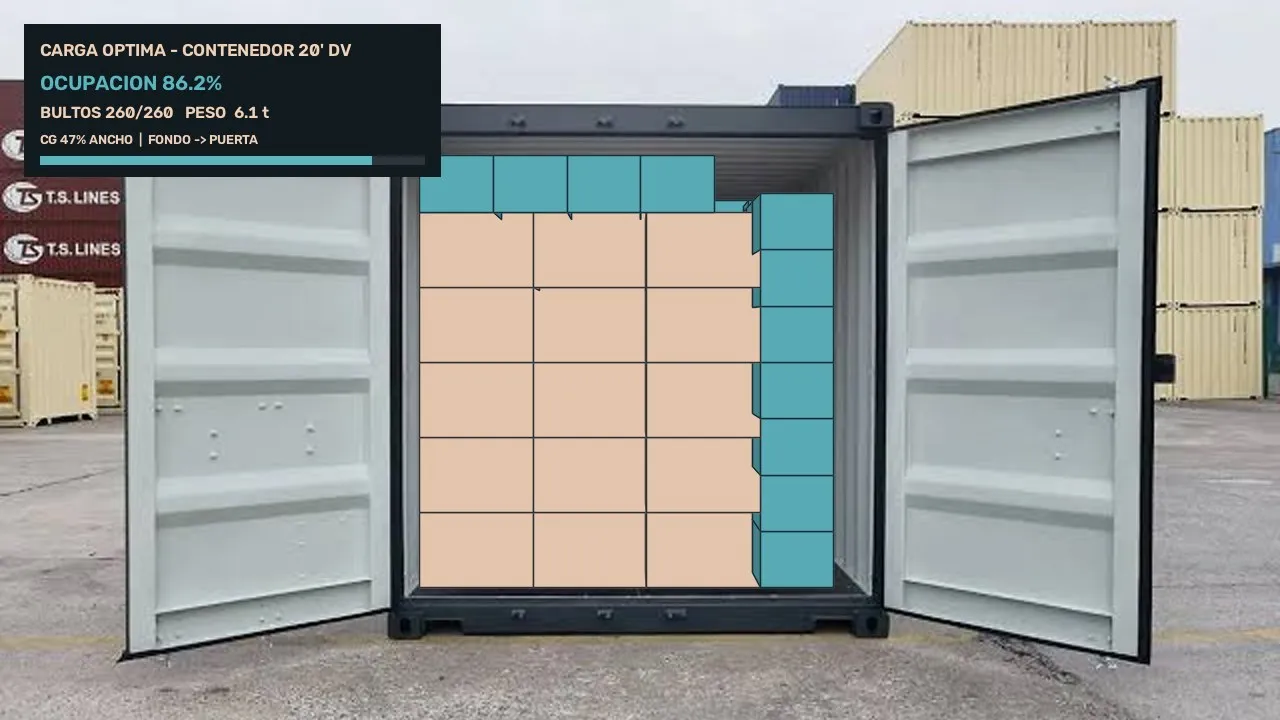
3D packing algorithms that work out how to load each container or truck while respecting weight, stackability and delivery order.
The essentials
- 01Calculates the load plan pallet by pallet.
- 02Respects axle weight, stackability, fragility and unloading order.
- 03Improves fill rate and cuts containers and trucks per shipment.
The problem
Loading a full container or truck often depends on the dock supervisor’s experience. It works, but leaves space unused and does not always respect the order of unloading.
A 3D packing algorithm evaluates thousands of combinations and returns a visual plan the team can follow.
How it works
Optimization · Google OR-Tools, PyomoPallet by pallet, in the right order, until the container is full.
- 01 · LoadList of pallets and packages with dimensions, weight and destination.
- 02 · PlanThe algorithm places each pallet within the constraints.
- 03 · FillThe container fills up with as little empty space as possible.
In operations
Where it applies
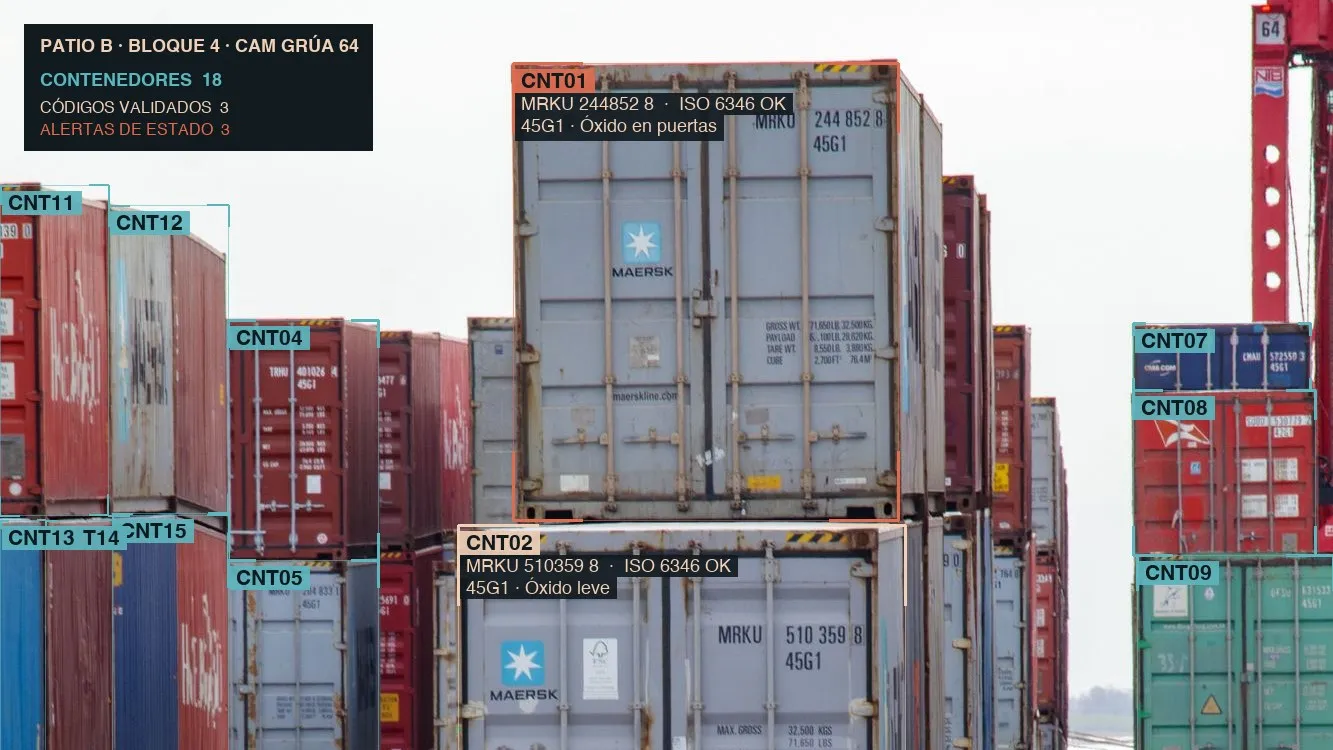
- Ocean containersStowage plans for 20 and 40 ft.
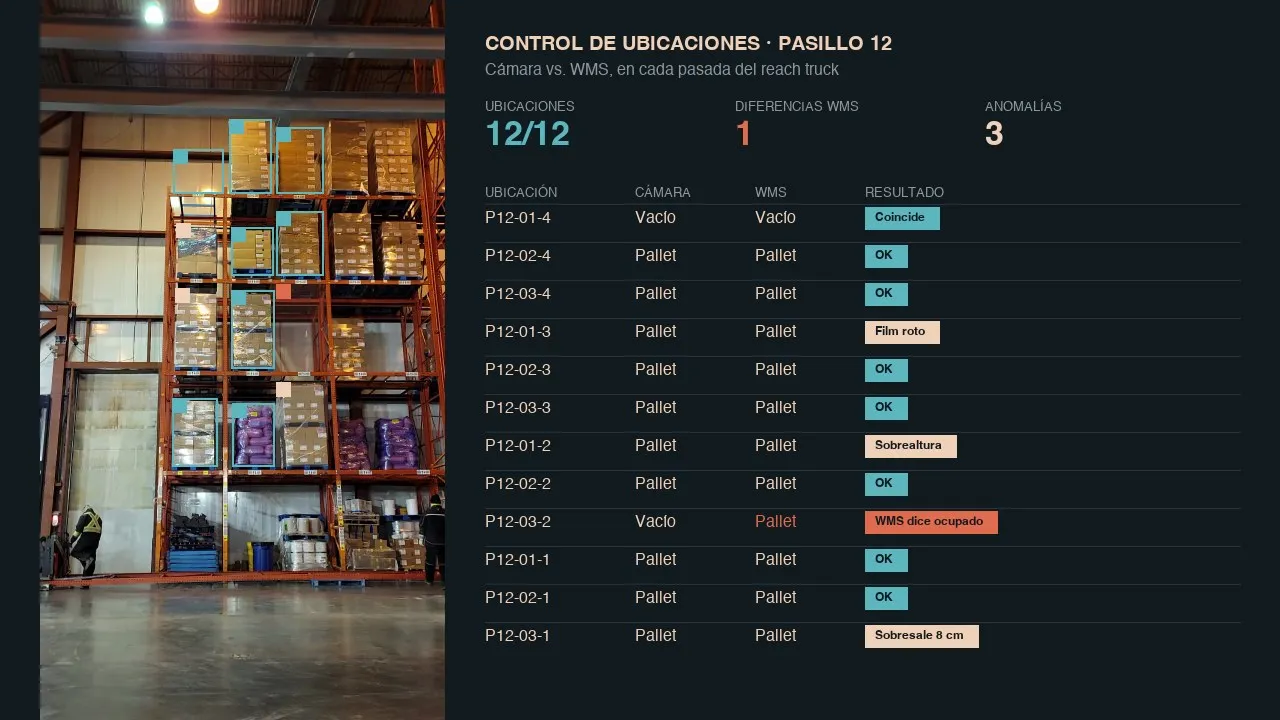
- Full truckloads (FTL)Weight distribution and unloading order per stop.
- ConsolidationCombining orders from several customers into one load.
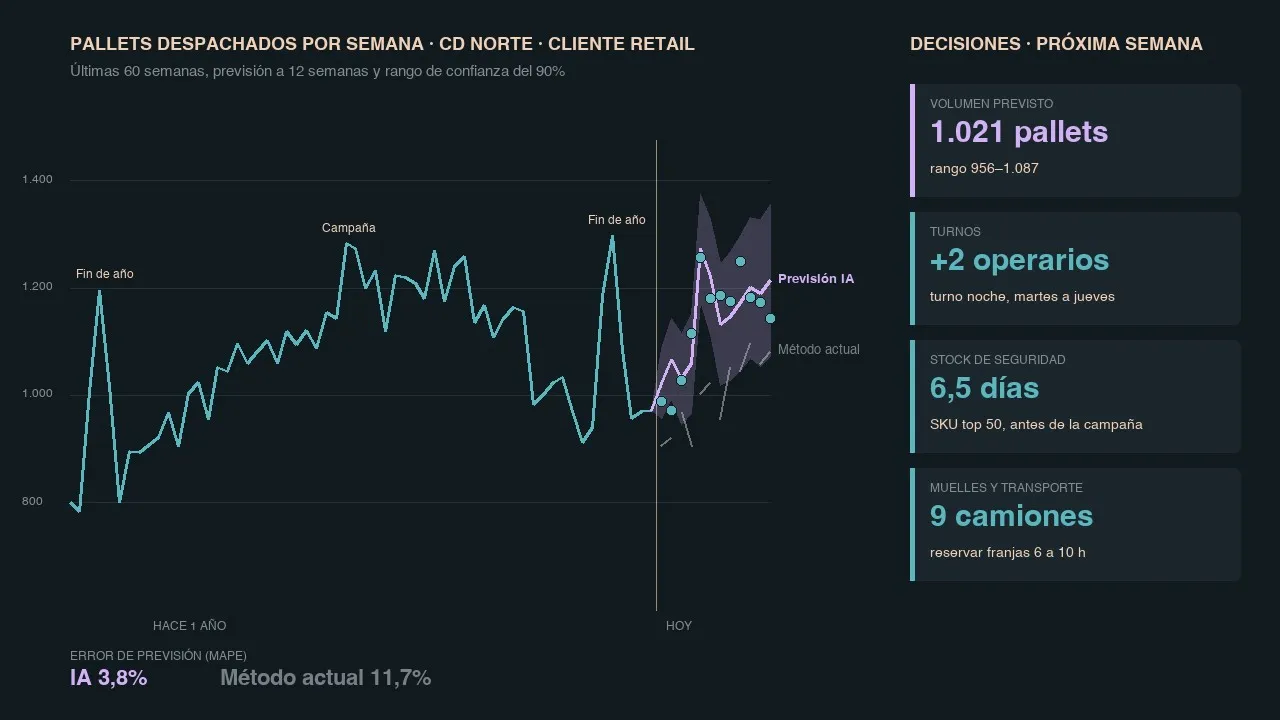
- QuotingHow many units you need before booking.
What it takes
The model is the easy part. The hard part is the operation.
- Data
- Reliable dimensions and weights for pallets and packages.
- Rules
- Stackability, fragility, axle weight and delivery order.
- Integration
- WMS for staging and TMS for equipment booking.
- Dock
- A visual plan on a tablet for whoever loads.
Technology
What we build it with
Model
- Google OR-ToolsOptimization
Infrastructure
- DigitalOceanCloud and GPUs
Integration
- FastAPIModel API
- InforCore system (ERP / WMS)
Reference tools. On each project we choose based on the architecture and systems the company already runs.
FAQ
Yes. That is where it makes the biggest difference versus manual loading.
Yes, if you give it the sequence of stops.
It depends on your load mix. We measure it on your real shipments before implementing.